Vertical video
Vertical video 9:16: why it has to start on set
Cropping a horizontal film doesn’t make a good vertical video. 9:16 has its own grammar, and it starts on set.

For a long time, vertical video was treated as a cut-price version: shoot in 16:9, then slice a strip out of the middle for Instagram. You can tell immediately — heads cut off, subjects drifting out of frame, camera moves that no longer make sense. Today, for many brands, vertical is the first place their film will be seen. It deserves better than a crop.
Cropping isn’t enough
A wide 16:9 shot is composed for width: a landscape, a room, two people talking. In a vertical strip, only a third of the image remains, and often not the right third. A shot designed for 9:16, on the other hand, plays on height: a full silhouette, a yacht seen from the bow, a villa façade from garden to roof.
That’s the whole idea behind my Vertical 9:16 page: every horizontal film has a vertical soul, but you have to go and find it on set.
Framing for the thumb
- Keep the subject in the middle of the height, not pinned to the top: the eye reads a phone screen from the centre downwards.
- Vertical moves: tilts from bottom to top, steadicam rises, drone shots that lift off. They use the height instead of fighting it.
- Portrait mode on the gimbal when the film is primarily for social: you frame what you deliver.
- Tighter shots: on a small handheld screen, details — a hand, a glass, a texture — say more than a wide shot.
The zones to keep clear
On Instagram, TikTok and Stories, the interface sits on top of your image: caption and account name at the bottom, action buttons on the right, progress bar at the top. A title or logo placed there will be hidden. The practical rule: keep text and key elements in the central part of the frame, with margin at the bottom and on the right.
The first three seconds
In a feed, nobody owes you their attention. The first shot has to give a reason to stay: movement, a face, an image you don’t expect. Slow openings that work in a two-minute corporate film lose viewers in vertical. The edit is tighter, the rhythm sharper, and the story has to make sense even if someone only watches ten seconds.
Sound, and subtitles
Many videos are watched with the sound off, on public transport or at the office. An interview without subtitles loses a large part of its audience. So I always deliver subtitles, in English and French for international events. Sound still matters for those who turn it on: licensed music and a mix designed for phone speakers.
Shoot once, deliver two formats
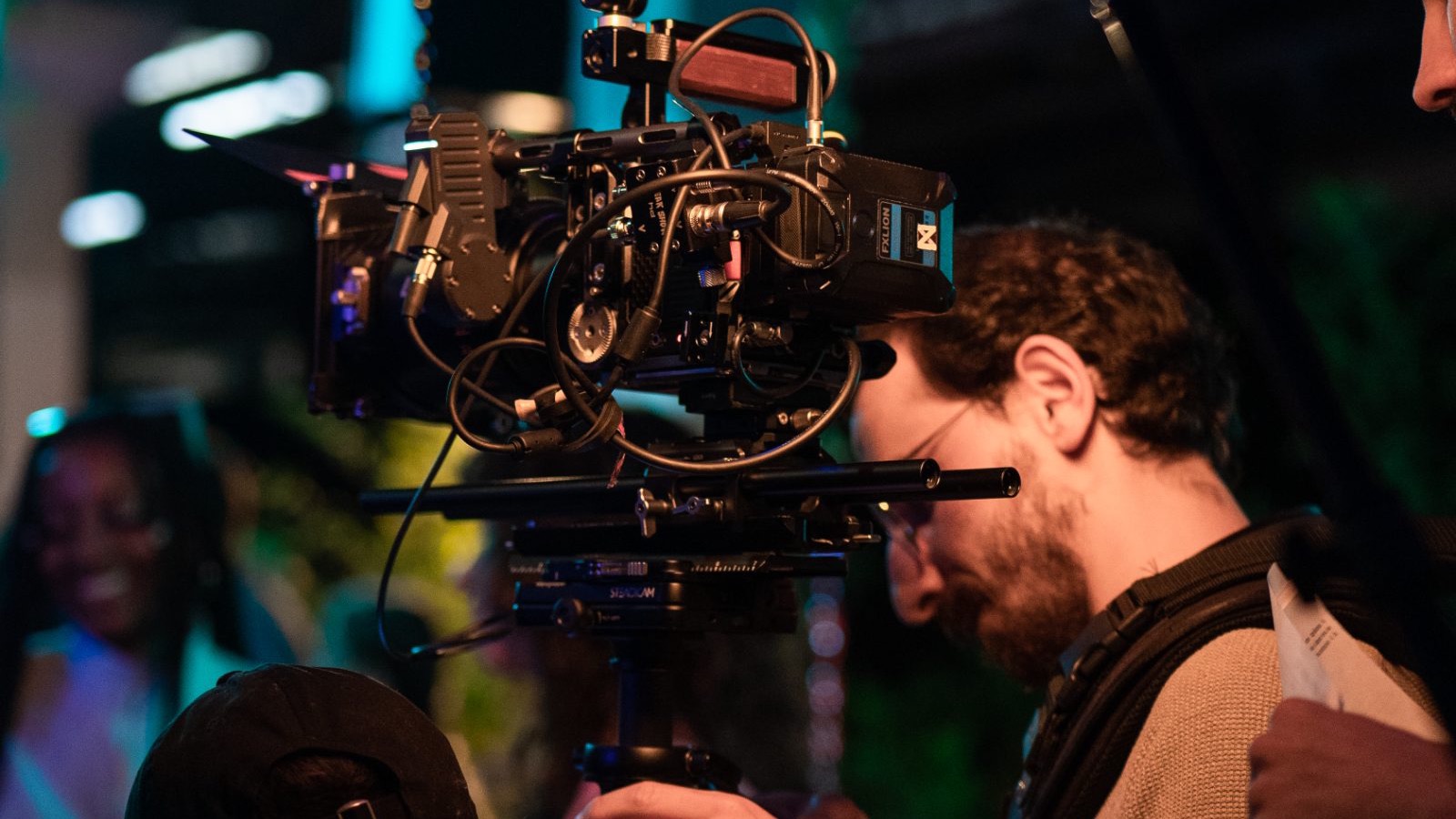
At an event, there’s no time to shoot everything twice. The answer is to frame with vertical in mind, or to shoot with enough resolution to extract a high-quality 9:16 shot. New cameras are heading that way: in Open Gate, the Sony FX5 can deliver an 1872 × 3328 vertical from the same take as the 16:9 shot.
What I deliver
- Vertical films in 1080 × 1920 (9:16) for Reels, TikTok and Stories;
- 4:5 and 1:1 versions for LinkedIn and the Instagram feed;
- subtitles, burnt in or as a separate file.
A few recent examples: Micro by the Fix, a private event for creators; Michel Amar’s site tour; and the Cannes Yachting Festival, from the red carpet to the pontoons. They’re all on the Vertical page, presented the way we watch them: in a feed.
FAQ
What is the right format for Instagram Reels or TikTok?
Vertical 9:16 at 1080 × 1920 pixels is the standard for Reels, TikTok and Stories.
Can a horizontal video be turned into a vertical one?
Yes, but a simple crop often cuts out what matters. The best results come from a shoot planned for both formats, or from an image large enough to crop without loss.
Should vertical videos be subtitled?
It’s strongly recommended: a large share of videos are watched without sound, and subtitles keep the message readable.